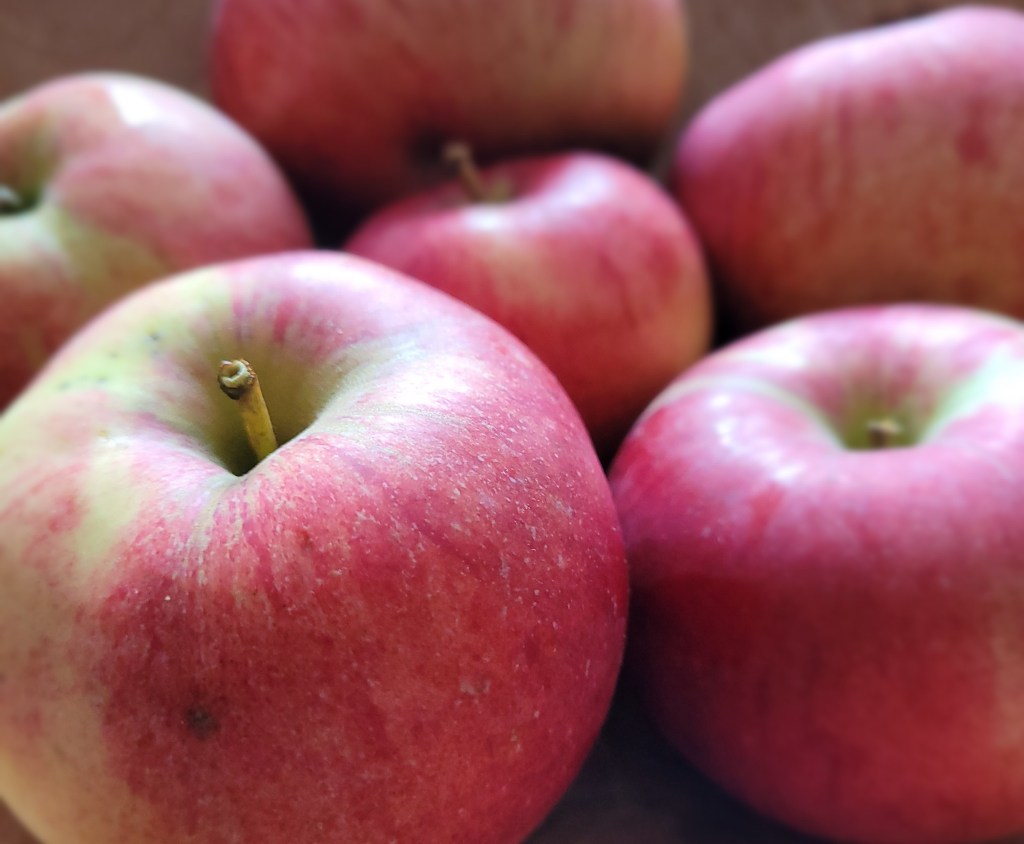
It has been a particularly good year for apples, at least in our corner of the world. As autumn draws in–the season in which I can legitimately wear as much corduroy as I want–our neighbours give away generous bags of the sweet, juicy fruit. This is the perfect excuse to make all the cakes, crumbles, and pies we want. Free food is always welcome. It is while admiring these apples that I was reminded of the apple scene in Snow White (Walt Disney, 1937), and of how we might be asked to just taste (or bite) something, as if it were the simplest thing in the world. Which, of course, it is not.
There is nothing simple about taste and it almost always leads to something else. Sometimes that thing is eating, sometimes not, as in the case of Snow White. There is also a big difference between tasting to eat and eating to taste.
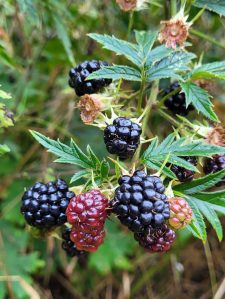
Let me explain. We can compare the apple scene with another scenario, this time with a fruit that is also currently in season: brambles (aka blackberries1). These are my favourite fruit to harvest because of all their associations. Of rambling walks through cold, damp autumn days, of finding the best bushes beside disused railway tracks, woven into overgrown hedges, and hiding in fields where few others dare to wander. A good bramble-picking excursion invariably means scratched and stained fingers from the thorns and juices. For me, it is never a question of whether we have enough brambles for jam but whether there will ever be enough bramble jam. So I do not simply taste brambles; I eat them so that I can taste. Their taste is the visceral encapsulation of the changing of the seasons and of walks in the wild.
One of the most beautifully visualised examples of this kind of thing, of how the sense of taste can evoke memories is, in my opinion, in an animated film involving a rat (though it is a rat–named Remy–who cooks rather than a rat who tastes, if that in any way makes it any better, which now that I think about it, probably doesn’t). The scene is from Ratatouille (directors Brad Bird and Jan Pinkava, 2007) in which a food critic eats the ratatouille that has been cooked by Remy.
You will have noticed the significance of the pen. Before the food is placed in his mouth, the pen is poised, ready to describe the experience in words. But there are no words2. The pen falls to the ground as the food critic becomes engrossed in the eating rather than the tasting.
The point is that most of the time, we are not tasting food, we are eating. And while we are eating, the perception of taste, to whatever degree and with whatever associations, gets taken along for the ride. When we are asked to have just a taste (or bite), by contrast, that sets up a whole different set of expectations. When children are asked to taste something, for instance, these expectations might be about daring to try a new food or about eating their dinner. More on that later.
Tasting to eat and eating to taste are therefore two different kinds of experiences and the words we use to describe them are, to say the least, misleading.
So what is taste?
Taste is…well, its complicated. Typically characterised as one of the main senses through which we experience food, taste can also be both a noun (as in the five main taste categories: bitter, salt, sour, sweet, and umami, or that someone has ‘good taste’) and a verb (as in I tasted the apple). So the word already invokes not only gustatory but also aesthetic connotations (as in having good or poor taste, for instance). What we often refer to as taste is probably flavour, which itself is sometimes used interchangeably with the qualities of a food (e.g. the apple had a sweet flavour) and includes smell. If you have a blocked nose or experience anosmia (the temporary or permanent lack of smell), you will know how much of a difference this makes to your sense of taste. If you want to impress your friends, you can tell them that this is because much of our sense of taste depends on retronasal olfaction (or retronasal smell), that is, the food aromas that pass through the back of the mouth and into the nasal cavity (i.e. the back of the nose). This is distinguished from those smells that we experience before food goes into our mouth (orthonasal olfaction), or what we usually just call ‘smell’.
There is still much that we are learning about taste, in part due to its comparatively shorter research history as one of the five primary (or ‘external’) senses. Like smell, taste has been considered not only too subjective and difficult to examine objectively, but also treated as one of the ‘lower’ senses. Like many ideas, this dates as far back as Aristotle and Plato. In what is known as the hierarchy of the senses, there is a distinction between the higher senses of vision and audition (seeing and hearing, to you and me) and the lower senses of gustation (taste), olfaction (smell), and somatosensation (touch)3. Taste has been considered unreliable as a sense-making tool, too primitive or animalistic, too intimate (in that we can’t share it in the way that we can share vision or hearing), and, thanks to Freud, and the Cadbury’s flake advert, a bit too close to other carnal pleasures.
Thankfully, things are changing. Research on taste has gained considerable traction in recent decades. Contemporary research on taste spans the disciplines of anthropology to sociology, philosophy to psychology, and sensory science to nutrition science. It has also discredited the often-quoted ‘Tongue Map’, in which different areas of the tongue were thought to be receptive to the different tastes of salt, sweet, bitter, and sour. If you’re as old as me and educated in certain countries, you may also have been taught this in school. It made for a great picture to colour in but that, unfortunately, is all it was4.
Tasting in the ‘wild’
One of the really curious things about taste is that we cannot switch it off5. We cannot close off our taste buds in the same way that we can close our eyes, pinch our nose, or cover our ears. It comes with the whole package, to a greater or lesser extent. When we are being asked to taste something, then, what we are being asked to do is, in principle, the same thing as eating (putting it into our mouths and sensing it with our tongue). But we treat it as an entirely different thing when we talk about it. This is where we need to distinguish between taste (as a sense or something that we experience) and tasting (as a sensory practice or something that we do).
While most research on taste (as a sense) happens under laboratory controlled conditions with individuals receiving small samples of food in tiny white plastic cups, there is a small but growing area of research looking at tasting in the wild (as a sensory practice). In other words, how we taste things during our everyday lives, such as when eating dinner with friends, trying cheese in gourmet shops, or during preschool (aka kindergarten) lunches. In these settings, we are usually tasting something when other people are around, so there is a social context to consider.
It turns out that there is a regular pattern to these sensory practices, an order to tasting that is as much to do with other people and the social context as it is to do with our own senses. Research on how customers taste cheese in gourmet shops6, for instance, has shown how tasting practices typically occur in the following sequence:
- A small piece of food is placed carefully in the mouth, often passed carefully from one person to another or taken from a larger piece of food
- The taster looks away (averts eye gaze) from other people as they chew the food. Conversation ceases. Other people may gaze at the taster now and again, or else divert their attention elsewhere.
- The taster re-establishes eye contact and gives an assessment, and the conversation resumes. In the case of cheese shops, this might be purchasing cheese or else tasting some more.
Apparently simple, right? In fact, we might say that it seems pretty obvious, until we consider the details of how it works. It is the looking away (averting eye gaze) that marks the moment as an individual experience but not, actually, private. If it were, there would be no need to pause the interaction or the conversational space in which the tasting is undertaken. People are given space to taste in a way that is very different from being given space to eat: we don’t usually stop talking while others are eating.
For those of you who enjoy foodie films, you might have seen similar tasting practices in scenes where people taste food7, such as in the film Chocolat (dir. Lasse Hallström, 2000) or multiple scenes in the film The Taste of Things (dir. Anh Hung Tran, 2023). Lucky for Juliette Binoche, who got to work in both of those films. Or the wonderfully tense Big Kahuna Burger scene from the totally-not-a-foodie-film-but-has-food-in-it Pulp Fiction (dir. Quentin Taratino, 1994). While the character Jules (played by Samuel L. Jackson) asks to try rather than taste the burger, the practice of tasting plays out in the now-recognisable format (and with a nice variation on the mmm to make it an mmhm, thus confirming that it is a tasty burger). For readers who prefer not to hear swear words, I suggest you stop the video before it gets to 1:38.
What we are doing when we are tasting, then, is very different to regular eating. The food is treated as something unfamiliar (we take small pieces at first), we focus on the chewing and mouth experience more than usual, and then we make a judgement about it. Regardless of the sense of taste, of what might be experienced from the individual’s perspective, these tasting practices play out in a fairly regular way in social interaction. More importantly, perhaps, is that tasting is often treated as a step toward something else, not necessarily a thing in itself. That is, we rarely just taste food. Something happens next, even if that thing is just to confirm that it is a tasty burger.
When it comes to children’s tasting practices, the thing it leads to is knowing more about the child themselves than about the senses.
Daring to taste
A striking thing about research into children’s tasting is that it often begins with the premise that children need to learn to taste. By contrast, research on adults and tasting typically begins from a different point: that we want to know how adults experience the taste of something or else about the taste of food itself.
In our research on how young children taste food during preschool lunches in Sweden, we found an almost identical tasting pattern to that found in the cheese-tasting study above. Children of as young as 4 or 5 years old (and in a different cultural setting) were also doing the thing where they pick up a tiny piece of food, look away while they chew (and there were visible mouth movements even when the food was a smooth sauce), then look back to the adult and give their assessment of the food. Sometimes this was a thumbs-up, sometimes it was a shake of the head and a down-turned mouth, sometimes it was a verbal response. But there was always an assessment; a value judgement of some kind.
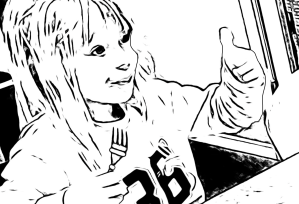
What was different from adult tasting, however, was that the children were often praised for being brave or daring to taste new foods and the subsequent judgement was used to gain an understanding about that child’s likes or dislikes. With a thumbs-up, for instance, the preschool staff could confirm that Jennifer liked the sauce, or that Jonas’s head shake meant that he didn’t like the veggie burgers. The tasting was a route to learning more about the child than about the food, as a way to develop themselves as a person and to learn about their food preferences.
From what we know so far, then, tasting in real-life situations tends to follow a regular pattern and is treated as the prelude to something else. While children’s tasting practices might be almost identical to adult’s, however, we treat it rather differently. I can’t remember the last time anyone praised me, as an adult, for being brave enough to try that really hot chilli pepper nor the slightly dubious ‘breakfast tea’.
Taste is never ‘just’ a taste
The kinds of thing that tasting can lead to all depend on the situation and the persons involved. If we are tasting as a chef or cook, it may lead to adjusting the ingredients of our recipe. If we are tasting as a customer in a shop or at a market, it may lead to purchasing (or not) a larger sample of the food. If we are children in preschool, it may be lead to knowledge about whether or not we like the food.
The phrase ‘just a taste’ also has something strangely threatening about it. Aside from the Snow White apple scene, it carries hints that the ‘just’ is there to trick us, to make us think that that’s all there is to it. Just a taste won’t hurt, will it? Like being conned into taking a tiny piece of something only to realise it was poison (like the apple), or totally addictive (like Doritos), or that our understanding of ‘just’ is not the same as yours (as in can I have just a taste of your ice-cream?).
Kids are wise to this, as they are to many things. Take the following example from a family dinner in the UK. Seven-year-old Sam still has a mountain of mashed potato8 on his plate toward the end of the meal, which soon becomes a topic of conversation.9
Dad:	so Samuel, how was your mashed potato?
		(4.0) ((Sam looks at his food))
Mum:	Dad made it
		(2.0) ((Sam leans back in his chair))
Sam:	uhm I- I don’t like mashed potato
Mum:	have you tried it? It’s all buttery
Sam:	no I just- I just won’t eat it
	 	(0.5)
Mum:	it’s just like the inside of your baked potato
Dad:	[yeah
Sam:	[stop trying to make me eat it
Dad:	it’s only potato [that’s been mashed up
Mum:		         [just have a taste is what
        we’re saying
Sam:	just have a taste?
Mum:	mm hm
Sam:	no!
Mum:	have a taste, you can even dip it in your
        ketchup
Dad:	yep, ketchup on it if you want
Mum:	do you want a bit of ketchup on it?
		(1.0)
Sam:	no!
Dad:	that’s fine, I’m not gonna force him to eat
Mum:	nope
Dad:	its just that he hadn't actually tried it
Like Snow White, Sam is understandably cautious about what is he being asked to do. Having already stated that he doesn’t like it and won’t eat it, he remains skeptical when Mum says just have a taste. Maybe he has seen Snow White and knows what happens. Meanwhile, his parents’ exasperation–familiar, perhaps, to many who find themselves in this situation–is all too apparent. Having a taste of the food is, in such situations, about being a step toward eating and both parents and child show their understanding of this (stop trying to make me eat it, I’m not gonna force him to eat). It is also very different from the kinds of scenes that play out in preschools or other early years education, where the staff members have a very different role and set of obligations than parents. Tasting is thus also context-bound.
The difference between having a bite of a juicy red apple (as in Snow White) or burger (as in Pulp Fiction) and the ratatouille (as in Ratatouille), therefore, is that the former are clearly treated as tasting and the latter as eating. While in theory the two are overlapping, in practice and in language they can be very different kinds of things. In the case of children, it all depends on who is doing the tasting and who is doing the asking.
One thing is clear, however, tasting is never just a taste.
Research references
The following are the research papers that are referred to (in most cases, with a hyperlink) in the blog post:
Bartoshuk, L. M., & Snyder, D. J. (2022). Taste. In Neuroscience in the 21st Century: From Basic to Clinical (pp. 1183-1214). Cham: Springer International Publishing.
Barwich, A. S. (2017). Up the nose of the beholder? Aesthetic perception in olfaction as a decision-making process. New Ideas in Psychology, 47, 157-165.
Korsmeyer, C. (1999). Making sense of taste: Taste and philosophy. Cornell University Press.
Korsmeyer, C. (2017). Taste and other senses: Reconsidering the foundations of aesthetics. Nordic Journal of Aesthetics, 26(54).
Lahne, J. (2016). Sensory science, the food industry, and the objectification of taste. Anthropology of food, (10).
Mann, A., Mol, A., Satalkar, P., Savirani, A., Selim, N., Sur, M., & Yates-Doerr, E. (2011). Mixing methods, tasting fingers: Notes on an ethnographic experiment. HAU: Journal of Ethnographic Theory, 1(1), 221-243.
McQuaid, J. (2016). Tasty: The art and science of what we eat. Simon and Schuster.
Mol, A. (2021). Eating in theory. Duke University Press.
Mondada, L. (2018). The multimodal interactional organization of tasting: Practices of tasting cheese in gourmet shops. Discourse Studies, 20(6), 743-769.
Mondada, L. (2021). Sensing in social interaction: The taste for cheese in gourmet shops. Cambridge University Press.
Shepherd, G. M. (2011). Neurogastronomy: how the brain creates flavor and why it matters. Columbia University Press.
Spence, C., Smith, B., & Auvray, M. (2015). Confusing tastes and flavours. Perception and its modalities, 247, 274.
Wiggins, S., Cromdal, J., & Willemsen, A. (2024). Daring to taste: The organisation of children’s tasting practices during preschool lunches. Appetite, 198, 107378.
- These are called björnbärs in Swedish, literally ‘bear berries’. Almost as cute as the word for strawberries, jordgubbar, which is translated as ‘earth’ (jord) ‘little lump(s)’ (gubbe, of which gubbar is the plural). Though the term gubbe/ar also means ‘old man’ which makes it even cuter. ↩︎
- There was, however, a gustatory mmm, of the type referred to in the Talking with your mouth full post. ↩︎
- If you’re curious to know about this, John McQuaid’s (2016) Tasty book is well worth a read. ↩︎
- Its also a really interesting story about how researchers can get things wrong if they skip the original research and work on the basis of assumptions, misinterpretation, and the allure of a pretty graph. See McQuaid’s Tasty book for a neat discussion about this. ↩︎
- Not deliberately, at least, though of course for many people the sense of taste might have been damaged or diminished through various conditions. See also anosmia. ↩︎
- Readers interested in cheese tasting and everything to do with tasting and sensory practices might be happy to know that there is a whole book on this subject: Lorenza Mondada’s (2021) Sensing in social interaction. See full reference above. ↩︎
- Or drink: see the wine-tasting scene from Absolutely Fabulous. ↩︎
- Just like Roy in Close Encounters of the Third Kind, only without the whole close-encounter-with-aliens experience to traumatise the poor lad. See the Play by the Rules blogpost. ↩︎
- The transcript is formatted in a manner typical of interactional research, though has been simplified to make it more readable for those unfamiliar with all the squiggly bits. But I have kept in the timings in fractions of seconds, because that’s the kind of nerdy thing that is really important to know about. Timing is everything. One second is a long time in conversation, four seconds is a lifetime. ↩︎
This work is licensed under CC BY-NC 4.0
 Mouth: full